In the Central Jordan Valley, where every drop is counted, Ferial Al-Jahran became one of the women her neighbours turn to, not for charity, but for know-how.
Summer comes early to the Central Jordan Valley. By the time the rest of Jordan feels the heat, the families here have already spent weeks measuring water, storing it, and rationing it. For years Ferial Al-Jahran watched the same season repeat: thirsty crops, low tanks, and the women of her community carrying decisions no one had trained them to make.
Jordan is among the most water-scarce countries on earth, and this valley lives that fact in miniature: farming and daily life drawing on a supply stretched thinner each year. When it runs short it is most often women who absorb the shock, reworking the day around what is left.
“Before, we waited for water and hoped. Now we plan for it, and I can show another woman how.”
Water was everyone's problem. It was rarely treated as everyone's responsibility, least of all as something a woman might lead on. That quiet assumption is what Ferial set out to change.
She joined Raidat Al-Taghyeer, the Water Wise Women initiative Johud runs alongside German development cooperation, as one of a group of women learning the practical science of water: how to find the leak that drains a household's monthly share in a week, how to reuse greywater safely on a home garden, how to store and manage a resource that arrives on no fixed schedule.
Raidat Al-Taghyeer means “women who lead change”. In her hands the name turned out to be literal. The lessons were practical, but the shift was larger than plumbing: managing water is managing a household's money, its health and its arguments, and here were women doing it with authority.
What she learned she refused to keep. She turned her own home into a working example, then began running sessions for other women on the unglamorous, essential things: a dripping valve, a rooftop tank baking in the sun, a bill that had suddenly doubled. Slowly, water stopped being a burden the women simply shouldered and became something they could manage, and teach.
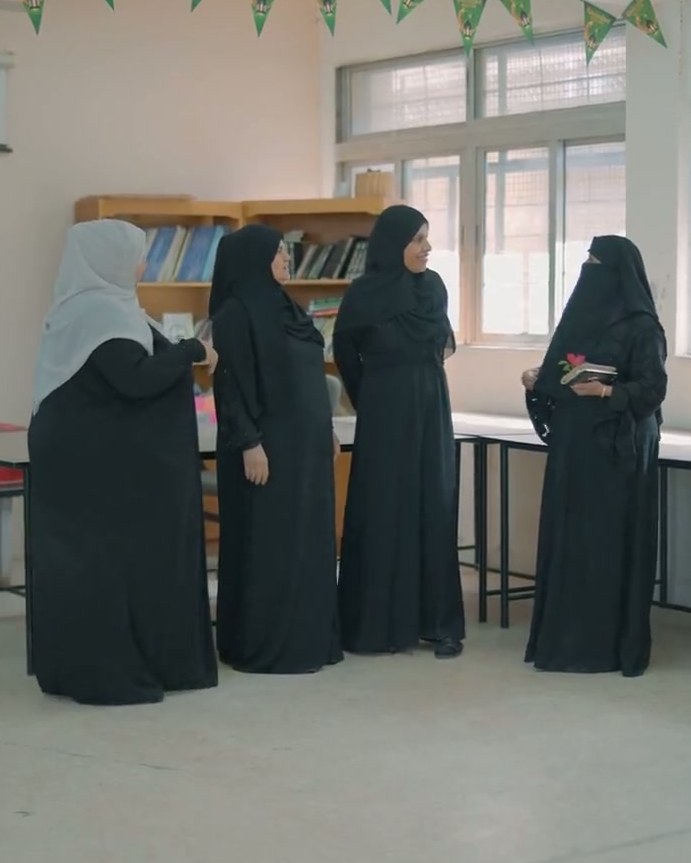
The change is not only in the tanks and the taps. In a community where leadership rarely wore a woman's face, Ferial is now consulted, quoted and followed. The knowledge gave her standing; her standing gave other women permission to claim their own.
Word travels. A daughter watches her mother read a meter and do the arithmetic. A neighbour asks how the garden stayed green on the same allocation. What began as a handful of household fixes has become, quietly, a local expertise that belongs to women.
This is what development that stays looks like. The initiative did not hand over a solution and leave; it built a platform (training, tools and trust), then stepped back so that women like Ferial could run it. When the funding cycle ends, the leak she fixes tomorrow is still fixed, and the woman she trains next month is still teaching.
On World Water Day the global theme was water and gender equality: the idea that how a society shares its water and how it shares power between women and men are, in the end, the same question. In the Central Jordan Valley, Ferial has been answering it one household at a time.
Water is scarce here. Leadership no longer is.