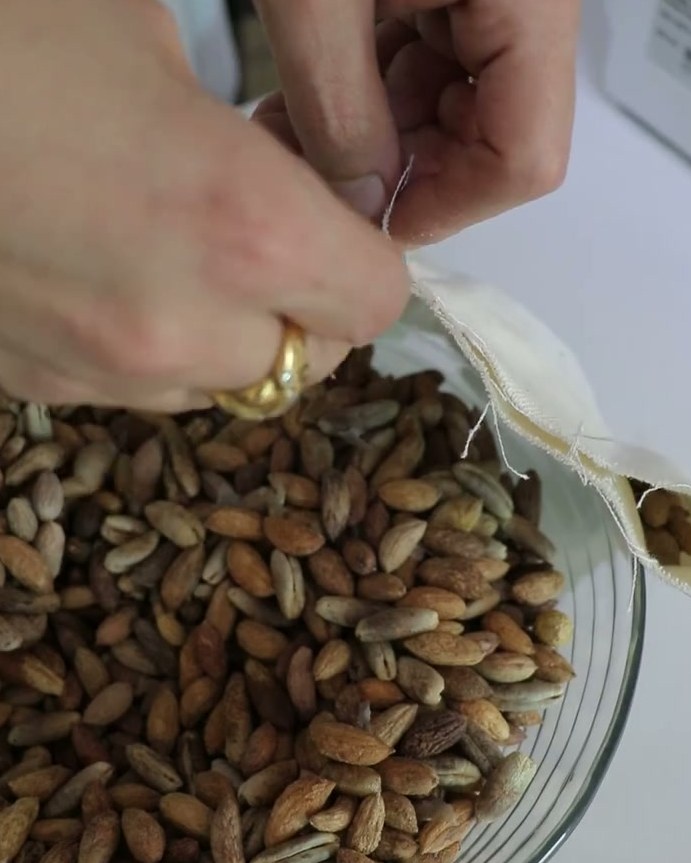
In Azmi el-Mufti Palestinian refugee camp in Irbid, a group of women were given a small plot of land. They turned it into a productive space and a source of income.
Refugee camps are built to be temporary, yet Azmi el-Mufti has stood for decades, like so many places where the temporary has become permanent.
Land is among the camp's scarcest resources. Space is measured in metres and shared across generations, so the plot's value far exceeded its modest size.
“A plot of ground that fits in a camp, made to produce a living.”
They planted it. Then they worked it properly, not as a hobby or a distraction, but as a source of income that answers to nobody's timetable but their own.
It is easy to write that sentence quickly. It is harder to hold what sits underneath it: that these are women in a refugee camp, several of them supporting households, in a country where formal work is difficult to enter and doubly difficult for a woman without capital or qualifications. Land is one of the few assets that will still pay you if you have neither.
The Goodwill Campaign, Johud's oldest and largest programme, works in places like this, and its instinct here was the right one: not to distribute food, but to make food. There is a large difference between a family that receives a parcel and a family that grows what goes into it. The first solves this month. The second changes the arithmetic of every month afterwards.
What grew on that plot became a livelihood, and the women running it became, in the specific sense that matters, producers rather than recipients.
Their story was shared publicly on World Refugee Day and reposted by HRH Princess Basma bint Talal, which is worth noting for a reason beyond profile. Refugee women are among the most photographed and least listened-to people in the region. To be shown working your own land, in your own name, is a different kind of visibility from the usual.
The camp is still a camp. Nobody here would pretend a garden resolves displacement. But displacement is not one problem; it is a hundred small dependencies stacked on top of each other, and each one that a woman removes for herself is permanent.