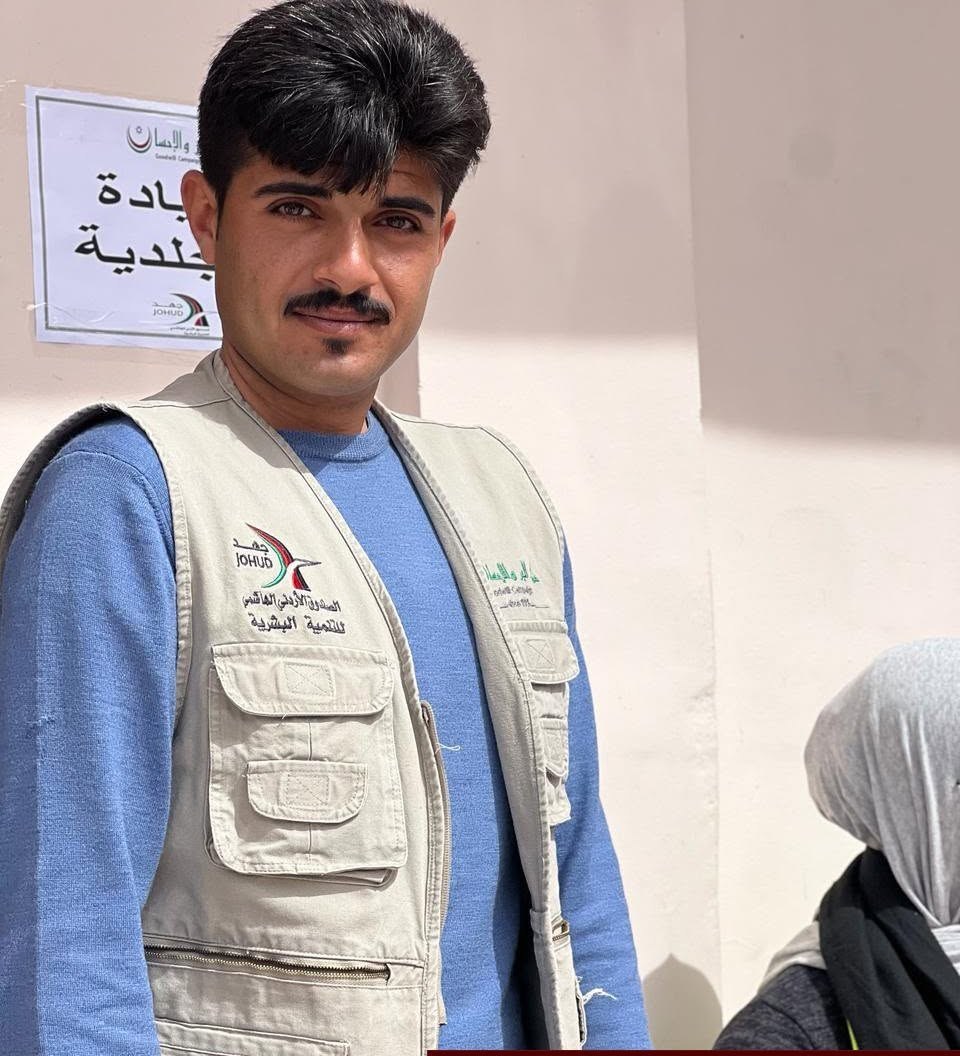
Faisal Al-Mahamid was trained as a facilitator. He was later elected to the Ma'an Governorate Council. The line between those two facts is short and deliberate.
Most governance programmes end at the certificate. Participants are trained in civic engagement, told that their voice matters, photographed holding a folder, and returned to communities where nothing about the distribution of power has changed.
Faisal Al-Mahamid's story is worth telling because it did not stop there.
“He was taught to run a room. Then he was elected to one.”
He is twenty-four, from Ma'an, and deputy head of the youth committees at Princess Basma Development Centre in the governorate. He came into the EU-funded project “Towards Good Governance in Ma'an” as a participant, and the record notes that from the outset he showed clear commitment and a high degree of initiative, which made him one of the most prominent young faces in the work.
The training he received was facilitator training, which is a more consequential thing than it sounds. A facilitator is not taught to hold opinions; he is taught to run a room: to structure a discussion, to hold competing interests in the same conversation, to keep a meeting moving towards a decision. These are precisely the skills of governance, taught in miniature.
Then he stood for the Ma'an Governorate Council, and won.
That is a genuinely significant sentence. Jordan's decentralisation reforms created governorate councils intended to move decisions closer to the people affected by them, and their weakness has always been the same: they tend to be filled by the already-established. A twenty-four-year-old arriving in that chamber, from a youth committee, with formal training in facilitation, is the reform working as designed.
The heading the centre gives his story is “from trainee to influential voice in decision-making”, and for once the phrase is literal rather than promotional. He is now inside the body that allocates and argues, in a governorate that has long felt decisions about it were made elsewhere.
There is a second young man in the same cohort worth naming: Abdullah Al-Saeedeen, who was elected to the Wadi Araba municipal council. Two young committee members, two elected seats.
That is the ceiling a youth programme should be judged against. Not attendance, not satisfaction scores: how many of the young people you trained are now in the room where it is decided.